Works to see at the Musée Gustave Moreau
A museum to be read from bottom to top
The museum has no marked route, and labels are rare. This is intentional, in the spirit of the will: Moreau requested that the “overall character” showing the sum of his work be preserved. The best approach is to follow the house’s order, from the ground floor to the large formats on the top floor. Here is how I visit it.
Ground floor: the reception room and the copies
Six small rooms overlook the garden. Four of them display drawings and copies after Italian masters, made by the young Moreau. The reception room, restored to its original state in 2003, was where he received guests. Look at the copies: they reveal the origins of his colours and figures. You will also find the Self-Portrait from 1850, at twenty-four years old, as serious as a notary.
First floor: the apartment
Dining room, bedroom, boudoir, hallway, study-library, open to the public only since 1991. The walls are covered with family portraits, mementos, and works by friends. Degas’s portrait of Moreau is here, along with paintings by Jules-Élie Delaunay and a still life by Jan Fyt. It is a nineteenth-century interior preserved just as it was, cluttered and dim, and this is what sets it apart from an ordinary museum.
Second floor: the large studio
You arrive via the main staircase, and the ceiling suddenly rises. The canvases are hung in several rows, all the way to the top. This is the floor of medium-sized works and unfinished pieces. The Chimeras (1884), a crowd of women and monsters on a cliff, is the most difficult to decipher and the richest. The Unicorns, ladies in embroidered gowns among white animals, is the one everyone photographs. Orpheus at the Tomb of Eurydice, Prometheus, The Abduction of Europa share the same walls. And the painted version of The Apparition, around 1875—the severed head before Salome—is the one that overwhelmed Huysmans in Against Nature.
Here begins the spiral staircase designed by Albert Lafon in 1896. It turns tightly, is made of iron, and leads to the final studio. I always let visitors climb it in silence.
Third floor: the very large formats
This is the studio of canvases as tall as carriage doors. Jupiter and Semele (1895), the god seated on a throne covered with figures, the mortal woman struck by lightning on his lap, is the late masterpiece in which Moreau poured all his knowledge. The Return of the Argonauts (1891–1897) remained unfinished, and the drawing shows beneath the colour. The Daughters of Thespius lines up dozens of figures across the entire height of the canvas. These are paintings to be viewed from afar, then up close, then from afar again.
Step back to the bay window for Jupiter and Semele: this is where Moreau looked at it. Then move closer to the throne. Every figure, every gemstone, is painted like a miniature.
The drawing cabinets
Moreau himself designed cabinets with pivoting panels to store his drawings, and they remain here, across both studios. You open one panel, then the next, like the pages of a book standing upright. Over 13,000 sheets lie within: studies of hands, drapery, horses, variations of the same face. No other museum in Paris allows visitors to leaf through a painter’s archives like this. Factor this time into your visit, as I explain on the page How long does the visit take?.
What the collection contains, in figures
Nearly 14,000 works: around 1,200 paintings, many of them sketches or unfinished canvases, 350 watercolours, over 13,000 drawings, and 15 wax models. Since the renovation completed in 2015, a graphic arts cabinet and storage facilities help preserve them. The history of this organisation is on the page History of the house-museum.
Famous works not exhibited here
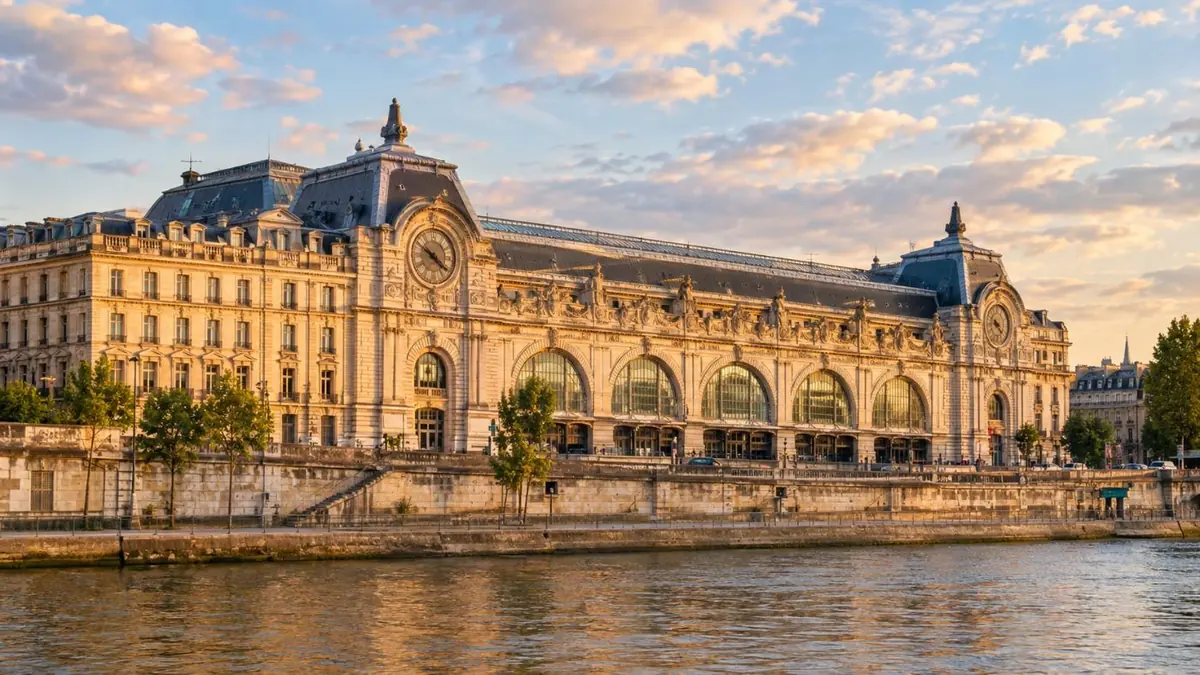
It is important to know this to avoid looking for them. Oedipus and the Sphinx (1864) is at the Metropolitan Museum in New York. Orpheus (1865), Galatea and Jason are at the Musée d’Orsay, twenty minutes away via Line 12; the watercolour of The Apparition (1876) is also part of the Musée d’Orsay and the Louvre’s prints and drawings department. Salome Dancing before Herod (1876) is at the Hammer Museum in Los Angeles, Moses Exposed on the Nile (1878) at the Fogg Art Museum in Cambridge. The Sphinx Guessed and Salome in the Garden, both from 1878, are in private collections. To see the Musée d’Orsay paintings with someone who can explain them, the guided tours of Orsay are the logical next step. And to understand the man behind it all, the page Who was Gustave Moreau?.
Combining with Orsay
The Musée Gustave Moreau ticket grants a reduced rate at the Musée d’Orsay. A two-hour guided tour in the afternoon stops by the Moreau works, then continues past Manet, Degas and Van Gogh.
Frequently asked questions
What is the most famous work exhibited at the Musée Gustave Moreau?
Jupiter and Semele (1895), on the third floor. Next are The Chimeras (1884), The Unicorns and the painted version of The Apparition. Allow an hour and a half to see them without rushing, as I explain on this page.
Is *Oedipus and the Sphinx* at the Musée Gustave Moreau?
No. The 1864 painting is at the Metropolitan Museum in New York. The museum does, however, preserve studies and variants in its drawing cabinets.
Where are Moreau’s paintings at the Musée d’Orsay?
Orpheus (1865), Galatea and Jason are displayed there. The guided tours of Orsay pass through the Symbolist rooms before the Impressionists, and the Musée Gustave Moreau ticket grants a reduced rate at the Musée d’Orsay.
Can the drawing cabinets be touched?
Yes, that is the idea: you open the pivoting panels one by one to browse the drawings, standing up, without touching the works themselves. Children love it; see the page visiting with children.
How many works does the museum hold?
Nearly 14,000: around 1,200 paintings, 350 watercolours, over 13,000 drawings, and 15 wax models, all from the 1897 bequest described on the museum history page.